The world of cultural heritage preservation has entered an exciting new era with the advent of terahertz technology for ancient ink identification. This groundbreaking approach is revolutionizing how scholars and conservators analyze historical manuscripts without causing any damage to these priceless artifacts.
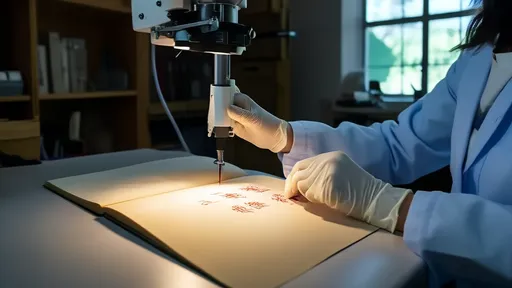
Terahertz radiation, occupying the electromagnetic spectrum between microwaves and infrared light, possesses unique properties that make it ideal for examining ancient documents. Unlike conventional methods that often require physical sampling or expose delicate materials to harmful radiation, terahertz waves can penetrate multiple layers of parchment or paper while being completely non-invasive and non-destructive.
The science behind this technology lies in how different ink formulations interact with terahertz waves. Ancient inks, whether carbon-based, iron gall, or other historical formulations, each create distinct spectral fingerprints when exposed to terahertz radiation. These spectral signatures allow researchers to not only identify the type of ink used but also trace its geographical origins and historical period of use.
Recent breakthroughs in terahertz imaging systems have enabled the detection of text that has faded beyond visible recognition. In several remarkable cases, scholars have successfully revealed completely illegible writings on manuscripts dating back to the Middle Ages. The technology can differentiate between original text and later additions or modifications, providing crucial insights into the editing history of important historical documents.
One of the most significant advantages of terahertz analysis is its ability to examine manuscripts that have been damaged by fire, water, or other environmental factors. Traditional imaging techniques often fail with such compromised materials, but terahertz waves can penetrate through charred layers or water stains that would otherwise obscure the text permanently.
The application of this technology extends beyond simple text recovery. Conservation teams are using terahertz analysis to assess the degradation state of inks and substrates, allowing for targeted preservation strategies. By understanding how different ink formulations age under various conditions, conservators can create optimal storage environments for specific manuscript collections.
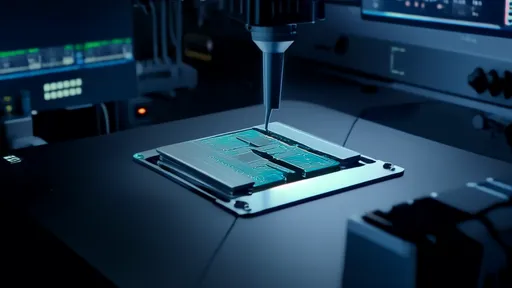
Challenges remain in making this technology more accessible to cultural institutions worldwide. Current terahertz systems require specialized equipment and trained operators, limiting their availability to well-funded research centers. However, ongoing developments in compact terahertz sources and automated analysis software promise to democratize this powerful tool in the coming years.
Several high-profile projects have demonstrated the transformative potential of terahertz ink analysis. At the Vatican Library, researchers used the technology to examine controversial marginalia in early Christian texts, settling long-standing debates about their authorship. Similarly, analysis of the Dead Sea Scrolls has provided new insights into scribal practices of the Essene community.
The marriage of terahertz technology with artificial intelligence represents the next frontier in ancient document analysis. Machine learning algorithms trained on thousands of ink spectra can now identify subtle patterns invisible to human analysts. This combination has already led to the discovery of previously unknown connections between medieval scriptoria based on their ink formulations.
As the technology matures, ethical considerations about its use have emerged. Some scholars argue that revealing every hidden layer of a manuscript might violate the historical integrity of the document as it was last used. Others counter that maximizing recoverable information serves the greater good of historical understanding. These debates will likely intensify as terahertz systems become more capable.
The impact of terahertz ink identification extends beyond academia. Auction houses and private collectors are beginning to employ the technology for authentication purposes, detecting forgeries that would fool conventional examination methods. Museums are incorporating terahertz analysis into their standard conservation protocols, ensuring that displayed manuscripts remain intact for future generations.
Looking ahead, researchers anticipate that terahertz technology will enable the creation of comprehensive digital archives that preserve not just the visible text of historical documents, but their complete material composition. Such archives would allow future scholars to conduct virtual "excavations" through manuscript layers long after the physical documents may have deteriorated beyond repair.
The development of portable terahertz scanners promises to bring this technology directly to archaeological sites and remote archives. Field researchers will soon be able to perform preliminary analyses on newly discovered documents before they're moved to conservation facilities, reducing the risks associated with transporting fragile artifacts.
While terahertz technology has proven remarkably effective for European and Middle Eastern manuscripts, researchers are now adapting the approach for other writing traditions. Early experiments with East Asian ink sticks and Mesoamerican pigments show promising results, suggesting that the technique may have universal applicability across all ancient writing systems.
Conservation scientists emphasize that terahertz analysis complements rather than replaces traditional paleographic and codicological methods. The most profound insights emerge when cutting-edge technology informs historical scholarship, and vice versa. This interdisciplinary approach is yielding unprecedented understanding of our written heritage.
As funding agencies and cultural institutions recognize the transformative potential of this technology, investment in terahertz research for heritage applications continues to grow. Several international collaborations have formed to establish standardized protocols and create shared databases of ink spectra, accelerating discoveries across institutions.
The story of terahertz ancient ink identification serves as a powerful reminder of how scientific innovation can breathe new life into humanity's oldest texts. What was once considered lost to time is now being recovered, offering fresh perspectives on civilizations long gone but whose words continue to speak to us through the marriage of ancient inks and modern technology.

By /Aug 15, 2025

By /Aug 15, 2025
By /Aug 15, 2025

By /Aug 15, 2025

By /Aug 15, 2025

By /Aug 15, 2025

By /Aug 15, 2025

By /Aug 15, 2025

By /Aug 15, 2025

By /Aug 15, 2025
By /Aug 15, 2025

By /Aug 15, 2025

By /Aug 15, 2025

By /Aug 15, 2025

By /Aug 15, 2025

By /Aug 15, 2025
By /Aug 15, 2025

By /Aug 15, 2025

By /Aug 15, 2025

By /Aug 15, 2025