Self-Healing Circuit Assessment

Aug 15, 2025 By

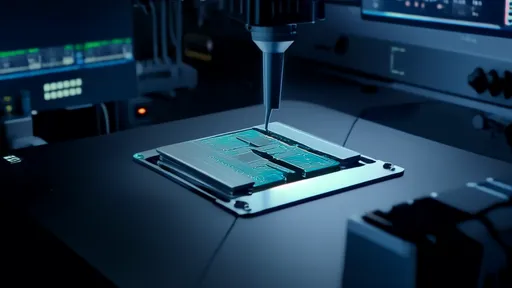
The field of self-healing circuits has witnessed remarkable advancements in recent years, with researchers developing innovative methods to evaluate the effectiveness of autonomous repair mechanisms. As electronic devices become increasingly complex and integral to modern life, the ability of circuits to recover from damage without human intervention presents a paradigm shift in reliability engineering. This article explores the cutting-edge techniques and challenges in assessing the healing performance of self-repairing circuits.

Understanding the Fundamentals of Self-Healing Circuit Assessment

Evaluating the healing capabilities of self-repairing circuits requires a comprehensive approach that goes beyond simple continuity tests. Researchers must consider multiple factors including the speed of recovery, the extent of damage that can be healed, and the long-term stability of repaired connections. The assessment process typically involves intentionally damaging circuits under controlled conditions and monitoring the autonomous repair process using advanced imaging techniques and electrical measurements.

Microscopy methods such as scanning electron microscopy (SEM) and atomic force microscopy (AFM) have proven invaluable for visualizing the healing process at nanometer scales. These tools allow scientists to observe the migration of healing agents and the reformation of conductive pathways in real-time. Electrical characterization techniques, including four-point probe measurements and impedance spectroscopy, provide quantitative data on the restoration of conductivity following damage events.

The Challenge of Standardizing Healing Metrics

One of the most significant hurdles in the field is establishing standardized metrics for comparing healing performance across different material systems and circuit designs. While some researchers focus on percentage conductivity recovery, others emphasize the number of healing cycles a material can endure before failure. The lack of uniform testing protocols makes it difficult to objectively compare results from different research groups and slows the commercialization of these technologies.

Environmental factors add another layer of complexity to healing assessment. Temperature, humidity, and mechanical stress can all influence healing performance, requiring comprehensive testing under various conditions. Accelerated aging tests are particularly important for determining whether healed circuits can maintain their performance over extended periods in real-world applications.

Advanced Characterization Techniques

Recent developments in in-situ characterization have revolutionized healing assessment. Combining electrical measurements with spectroscopic techniques such as Raman spectroscopy or X-ray photoelectron spectroscopy (XPS) provides insights into both the electrical and chemical aspects of the healing process. This multimodal approach helps researchers understand not just whether a circuit heals, but how the healing mechanism works at molecular levels.

Machine learning algorithms are increasingly being employed to analyze the vast amounts of data generated during healing experiments. These tools can identify subtle patterns in healing behavior that might escape human observation, potentially leading to the discovery of more efficient healing mechanisms. The integration of artificial intelligence with experimental data analysis represents a significant leap forward in assessment capabilities.

Real-World Performance Evaluation

Laboratory tests, while valuable, cannot fully replicate the complex operating conditions that circuits face in actual applications. Researchers are developing new testing methodologies that subject self-healing circuits to realistic stress scenarios, including thermal cycling, mechanical flexing, and exposure to corrosive environments. These tests provide crucial data about how healing performance translates from controlled lab environments to practical implementations.

Field testing represents the ultimate validation of healing effectiveness. Several research groups have begun deploying prototype self-healing circuits in harsh environments, from industrial settings to space applications. The data collected from these real-world trials is invaluable for refining both the materials and the assessment techniques used in laboratory settings.

Future Directions in Healing Assessment

As the field matures, researchers are shifting focus from simply demonstrating healing capability to optimizing healing efficiency and reliability. New assessment protocols are being developed to evaluate not just whether a circuit can heal, but how quickly it can do so while maintaining signal integrity. This requires sophisticated testing setups that can precisely control damage parameters and simultaneously monitor multiple performance metrics.

The development of self-healing circuits for high-frequency applications presents unique assessment challenges. At microwave and millimeter-wave frequencies, even minor imperfections in healed circuits can significantly impact performance. Specialized testing equipment and methodologies are being created to evaluate healing effectiveness in these demanding applications where traditional DC resistance measurements provide insufficient information.

Ultimately, the goal of healing assessment is not just to quantify performance but to provide feedback for improving material formulations and circuit designs. As assessment techniques become more sophisticated, they will play a crucial role in guiding the development of next-generation self-healing electronics capable of unprecedented reliability in the face of inevitable damage and degradation.
Recommend Posts
IT

Chemical Stability of Immersion Cooling Fluids

By /Aug 15, 2025

Immersion cooling has emerged as a revolutionary approach in thermal management, particularly for high-density computing applications like data centers and cryptocurrency mining. At the heart of this technology lies the immersion cooling fluid, a specialized dielectric liquid that directly contacts electronic components to dissipate heat. While much attention is paid to thermal conductivity and viscosity, the chemical stability of these fluids often becomes the unsung hero determining long-term system reliability.
IT

Taint Analysis of Smart Contracts

By /Aug 15, 2025

As blockchain technology continues to evolve, smart contracts have become the backbone of decentralized applications. However, with their increasing adoption comes a surge in vulnerabilities and exploits. One of the most promising techniques to address these security challenges is taint analysis. This method, borrowed from traditional software security, is now being adapted to the unique environment of blockchain and smart contracts.
IT

Self-Healing Circuit Assessment

By /Aug 15, 2025

The field of self-healing circuits has witnessed remarkable advancements in recent years, with researchers developing innovative methods to evaluate the effectiveness of autonomous repair mechanisms. As electronic devices become increasingly complex and integral to modern life, the ability of circuits to recover from damage without human intervention presents a paradigm shift in reliability engineering. This article explores the cutting-edge techniques and challenges in assessing the healing performance of self-repairing circuits.
IT

Microbial Fuel Cell Efficiency

By /Aug 15, 2025

The quest for sustainable energy solutions has led scientists to explore unconventional avenues, one of which is the microbial fuel cell (MFC). These fascinating devices harness the metabolic activity of microorganisms to generate electricity, offering a glimpse into a future where wastewater treatment plants could double as power stations. While the concept is elegant in its simplicity, the efficiency of MFCs remains a critical hurdle preventing widespread adoption.
IT

Neuromorphic Taste Encoding

By /Aug 15, 2025

The human sense of taste represents one of nature's most sophisticated chemical detection systems, capable of distinguishing subtle molecular differences with remarkable efficiency. Recent advances in neuromorphic engineering have begun unraveling the complex neural coding principles behind gustatory perception, opening new frontiers in artificial intelligence and human-machine interfaces.
IT

Myoelectric Gesture Power Consumption Optimization

By /Aug 15, 2025

The field of human-computer interaction has witnessed remarkable advancements in recent years, particularly in the domain of gesture recognition. Among the various technologies enabling this progress, electromyography (EMG)-based gesture control stands out as a promising approach. However, as with any wearable or embedded system, power consumption remains a critical challenge that researchers and engineers must address to ensure practical, long-lasting implementations.
IT

DBA Transformation in the AIGC Era

By /Aug 15, 2025

The rapid evolution of Artificial Intelligence Generated Content (AIGC) is reshaping industries across the globe, and the role of Database Administrators (DBAs) is no exception. As organizations increasingly adopt AI-driven solutions, DBAs find themselves at a crossroads—adapt or risk obsolescence. The transformation isn’t just about learning new tools; it’s about redefining their value in an era where automation and machine learning are becoming the backbone of data management.
IT

DNA Storage Parallelization in Writing Process

By /Aug 15, 2025

The field of DNA data storage has reached an inflection point where researchers are no longer asking if biological molecules can serve as viable archival media, but rather how quickly and at what scale we can implement this revolutionary technology. At the heart of this transition lies the critical challenge of write parallelization - the ability to simultaneously encode digital information across multiple DNA strands without compromising data integrity or synthesis accuracy.
IT

Technology Decision Regret Model

By /Aug 15, 2025

The concept of regret in decision-making has long fascinated psychologists, economists, and business leaders alike. When it comes to technology, the stakes are often higher, the outcomes more uncertain, and the repercussions longer-lasting. The Technology Decision Regret Model provides a framework for understanding how individuals and organizations grapple with the consequences of their tech-related choices. Unlike traditional models that focus solely on rational cost-benefit analysis, this approach acknowledges the emotional and psychological toll of suboptimal decisions in a rapidly evolving digital landscape.
IT

Cross-device Context-Aware Latency

By /Aug 15, 2025

The concept of cross-device context-aware latency is rapidly gaining traction in the tech industry as seamless connectivity becomes a non-negotiable expectation for modern users. Unlike traditional latency issues that focus solely on network performance, this emerging challenge encompasses the synchronization delays between multiple devices operating within an interconnected ecosystem. From smart homes to wearable tech and industrial IoT, the frictionless transfer of contextual data across devices is now a critical component of user experience.
IT

Ultrasonic Tactile Intensity Control

By /Aug 15, 2025

The realm of haptic feedback has witnessed a groundbreaking evolution with the advent of ultrasound-based tactile intensity control. This technology, which manipulates ultrasonic waves to create tangible sensations in mid-air, is redefining how humans interact with digital interfaces. Unlike traditional haptic systems that rely on physical contact, ultrasound haptics offers a touchless experience, enabling users to feel textures, shapes, and even pressure without direct mechanical stimulation.
IT

Ultra-Fusion AI Computing Power Fragments Organization

By /Aug 15, 2025

The rapid evolution of AI workloads has ushered in a new era of computational demands, pushing traditional infrastructure models to their limits. Hyperconverged systems, once hailed as the silver bullet for IT simplification, now face an unexpected challenge: AI-driven compute fragmentation. This phenomenon is reshaping how enterprises approach their data center strategies, forcing a reevaluation of resource allocation in an increasingly AI-centric world.
IT

Brain-Computer Interface Thought Classification Speed

By /Aug 15, 2025

The field of brain-computer interfaces (BCIs) has witnessed remarkable advancements in recent years, particularly in the domain of thought classification speed. Researchers and engineers are pushing the boundaries of what's possible, enabling faster and more accurate interpretation of neural signals. This progress holds immense potential for applications ranging from medical rehabilitation to augmented communication systems.
IT

Digital Olfactory Concentration Perception

By /Aug 15, 2025

The concept of digital olfaction – the ability to detect, transmit, and recreate scents through technology – has long been relegated to the realm of science fiction. However, recent advancements in sensor technology, machine learning, and material science have brought us closer than ever to achieving a functional digital sense of smell. At the heart of this breakthrough lies the challenge of quantifying scent concentration perception, a complex interplay of chemistry, biology, and data science that could revolutionize industries from healthcare to entertainment.
IT

Vector Database Similarity Threshold

By /Aug 15, 2025

The concept of similarity thresholds in vector databases has emerged as a critical consideration in modern data retrieval systems. As organizations increasingly rely on vector embeddings to power search, recommendation, and classification systems, understanding how to properly set and utilize similarity thresholds becomes paramount for achieving optimal performance.
IT

Anti-Condensation Design for Edge Devices

By /Aug 15, 2025

In the realm of industrial automation, telecommunications, and IoT deployments, edge devices often operate in harsh environmental conditions where temperature fluctuations and humidity pose significant challenges. One of the most persistent yet frequently overlooked threats is condensation, which can lead to corrosion, electrical shorts, and premature device failure. As these devices increasingly handle mission-critical tasks, designing robust anti-condensation mechanisms has become a non-negotiable aspect of product development.
IT

Terahertz Ancient Manuscript Ink Recognition

By /Aug 15, 2025

The world of cultural heritage preservation has entered an exciting new era with the advent of terahertz technology for ancient ink identification. This groundbreaking approach is revolutionizing how scholars and conservators analyze historical manuscripts without causing any damage to these priceless artifacts.
IT

The Effectiveness of Incentives in Open Source Communities

By /Aug 15, 2025

The sustainability of open source communities has become a critical discussion point in software development circles. While the ideological foundations of open source emphasize collaboration and free access, maintaining contributor engagement requires sophisticated incentive structures that go beyond pure altruism.
IT

Cognitive Load in Remote Teams

By /Aug 15, 2025

The rise of remote work has fundamentally altered how teams collaborate across distances. While this shift offers unprecedented flexibility, it also introduces unique cognitive challenges that traditional office environments rarely encountered. Remote teams now grapple with invisible barriers that impact how information is processed, shared, and retained across digital channels.
IT

Thermal Management for Optoelectronic Co-Packaged Systems

By /Aug 15, 2025

The rapid evolution of high-performance computing and data centers has brought thermal management to the forefront of technological challenges, particularly in the context of photonic-electronic co-packaging. As the demand for faster data transmission and lower latency grows, integrating optical interconnects with traditional electronic circuits becomes essential. However, this convergence introduces significant thermal complexities that require innovative solutions to maintain reliability and efficiency.