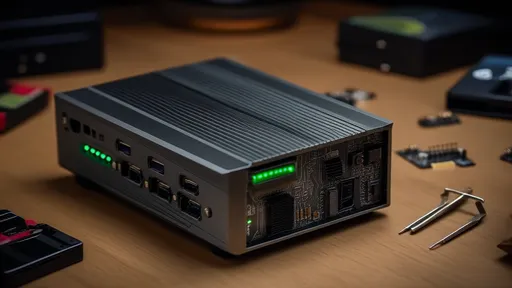
The world of technology thrives on innovation, but sometimes the most groundbreaking advancements emerge from the shadows—through the meticulous process of reverse engineering unpublicized prototypes. This practice, often operating in legal gray areas, involves dissecting and analyzing hardware or software that was never officially released to the public. The motivations behind such endeavors range from academic curiosity to corporate espionage, but the outcomes frequently reshape industries.
The allure of unreleased prototypes lies in their potential to reveal untapped ideas or abandoned technologies. Companies frequently shelve projects due to market shifts, budget constraints, or strategic pivots, leaving behind partially developed concepts. These prototypes can contain novel approaches to problems that current products haven’t solved. Reverse engineers who uncover these artifacts often find themselves staring at blueprints for the future—ideas that were ahead of their time but may now be ripe for revival.
One of the most famous examples of this phenomenon was the discovery of a prototype smartphone from the early 2000s, which featured a touchscreen interface years before the iPhone’s debut. The device, never mass-produced, was later dissected by a group of enthusiasts who documented its functionality. Their findings suggested that the technology for modern smartphones existed far earlier than commonly believed, but corporate hesitancy delayed its widespread adoption.
The ethical and legal tightrope of reverse engineering unpublicized prototypes cannot be ignored. While some argue that analyzing abandoned technology fosters innovation, others contend that it infringes on intellectual property rights. Legal frameworks vary by jurisdiction, but many countries impose strict penalties for the unauthorized replication or distribution of proprietary designs. Despite these risks, the practice persists, driven by the insatiable demand for a competitive edge in fast-moving industries like consumer electronics and automotive design.
In the automotive sector, for instance, clandestine teardowns of pre-production vehicles are commonplace. Manufacturers go to great lengths to conceal their prototypes, using camouflage wraps and deceptive body panels to obscure design details. Yet, dedicated reverse engineers often succeed in piecing together the underlying technology, leaking specifications months—or even years—before official announcements. These revelations can force companies to accelerate their timelines or rethink their strategies entirely.
The role of secrecy and deception in prototype development has escalated into a high-stakes game of cat and mouse. Tech giants now employ counter-reverse engineering tactics, embedding false data or dummy components in their prototypes to mislead competitors. Some even plant decoy devices with intentionally flawed designs, knowing they’ll be intercepted and analyzed. This subterfuge adds another layer of complexity to the already murky world of prototype reverse engineering.
Beyond corporate intrigue, there’s a growing community of hobbyists who specialize in resurrecting forgotten prototypes. Online forums and niche publications serve as hubs for sharing discoveries, from obscure gaming consoles to experimental medical devices. These enthusiasts often operate without commercial motives, driven instead by a passion for preserving technological history. Their work has salvaged countless artifacts that might otherwise have been lost to time.
The future of prototype reverse engineering is likely to be shaped by advancements in artificial intelligence and machine learning. Automated tools can now analyze hardware and software at unprecedented speeds, identifying patterns and vulnerabilities that human engineers might miss. While this could democratize the process, it also raises concerns about the potential for misuse, particularly in the realm of cybersecurity. As the line between innovation and intrusion blurs, the debate over the ethics of reverse engineering will only intensify.
What remains clear is that the dissection of unpublicized prototypes will continue to influence the trajectory of technology. Whether through corporate espionage, academic research, or hobbyist curiosity, these hidden gems offer a glimpse into roads not taken—and sometimes, a second chance for ideas that deserve to see the light of day.
By /Aug 15, 2025

By /Aug 15, 2025

By /Aug 15, 2025

By /Aug 15, 2025
By /Aug 15, 2025
By /Aug 15, 2025

By /Aug 15, 2025

By /Aug 15, 2025

By /Aug 15, 2025

By /Aug 15, 2025
By /Aug 15, 2025

By /Aug 15, 2025

By /Aug 15, 2025
By /Aug 15, 2025

By /Aug 15, 2025
By /Aug 15, 2025

By /Aug 15, 2025
By /Aug 15, 2025
By /Aug 15, 2025

By /Aug 15, 2025