The accuracy of multilingual simultaneous interpretation has long been a critical benchmark in the field of language services. As globalization accelerates and cross-border communication becomes more frequent, the demand for high-quality interpretation services has surged. However, achieving near-perfect accuracy in real-time multilingual interpretation remains an elusive goal for many providers. The complexity of human languages, cultural nuances, and the pressure of live delivery create a challenging environment even for seasoned professionals.
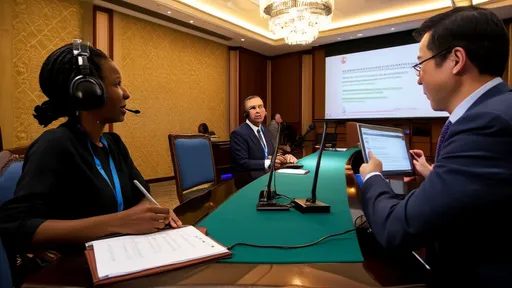
Understanding the challenges of multilingual interpretation requires a deep dive into the mechanics of the process. Unlike written translation, simultaneous interpretation happens in real time, with almost no room for error correction. Interpreters must listen, comprehend, translate, and speak almost simultaneously, often working with just a few seconds of lag time. This cognitive load increases exponentially when dealing with multiple languages in the same session. Technical limitations, audio quality issues, and speaker idiosyncrasies further complicate the task.
The measurement of interpretation accuracy itself presents methodological difficulties. Traditional metrics developed for written translation often fail to capture the dynamic nature of spoken interpretation. Some researchers propose segment-based evaluations, while others advocate for meaning-based assessment frameworks. The lack of standardized measurement tools across the industry makes comparative analysis between different interpretation services particularly challenging.
Technological advancements have begun to reshape the landscape of multilingual interpretation. AI-powered tools now assist human interpreters with terminology suggestions, real-time transcription, and even predictive interpretation. However, these technologies still struggle with context-dependent meanings, humor, and cultural references that human interpreters navigate intuitively. The most effective solutions currently available combine cutting-edge technology with human expertise in a hybrid model that maximizes the strengths of both approaches.
Cultural competence emerges as perhaps the most underappreciated factor in interpretation accuracy. Words don't exist in a vacuum—they carry cultural baggage and contextual meanings that dictionaries often fail to capture. An interpreter's deep understanding of the cultural frameworks of both source and target languages frequently makes the difference between a technically correct translation and one that truly resonates with the audience. This becomes particularly crucial in diplomatic settings, legal proceedings, and medical interpretation where nuance can have significant consequences.
The training and certification of interpreters significantly impacts service quality across the industry. While many countries have established certification programs, requirements vary dramatically between regions and language pairs. Some interpretation sectors, such as court interpreting, maintain rigorous standards, while others operate with minimal oversight. This inconsistency in professional standards contributes to the wide variation in interpretation accuracy observed across different service providers.
Real-world applications demonstrate how interpretation accuracy affects outcomes in high-stakes environments. In international business negotiations, even minor interpretation errors can lead to misunderstandings that derail deals. In healthcare settings, inaccurate medical interpretation can have life-or-death consequences. The European Union's multilingual parliamentary sessions provide another compelling case study, where interpretation accuracy directly impacts legislative processes and policy implementation across member states.
Looking toward the future, the interpretation industry faces both challenges and opportunities. The growing demand for rare language combinations tests the limits of existing interpreter networks. Meanwhile, developing technologies promise to enhance interpreter performance through better tools and support systems. However, the human element remains irreplaceable for the foreseeable future, particularly in situations requiring cultural sensitivity and nuanced understanding.
The pursuit of perfect interpretation accuracy continues to drive innovation in the field. As researchers develop more sophisticated assessment methodologies and practitioners refine their techniques, the gap between ideal and achievable accuracy narrows. Yet the very nature of language as a living, evolving system ensures that interpretation will always be as much art as science—a complex dance of meaning transfer that resists complete quantification.
For organizations relying on multilingual interpretation services, understanding these complexities is essential. Rather than seeking perfection, smart consumers of interpretation services learn to identify providers that offer the optimal balance of accuracy, speed, and cultural competence for their specific needs. In an increasingly connected world, high-quality interpretation serves as the invisible infrastructure making global communication possible—one carefully interpreted word at a time.

By /Aug 15, 2025
By /Aug 15, 2025

By /Aug 15, 2025

By /Aug 15, 2025

By /Aug 15, 2025

By /Aug 15, 2025

By /Aug 15, 2025

By /Aug 15, 2025
By /Aug 15, 2025
By /Aug 15, 2025

By /Aug 15, 2025
By /Aug 15, 2025

By /Aug 15, 2025

By /Aug 15, 2025
By /Aug 15, 2025

By /Aug 15, 2025
By /Aug 15, 2025
By /Aug 15, 2025
By /Aug 15, 2025

By /Aug 15, 2025